









In Focus – SCCCU Blog
Stay informed about the Credit Union’s activities, plus get practical advice on a variety of personal finance topics.
 Business Solutions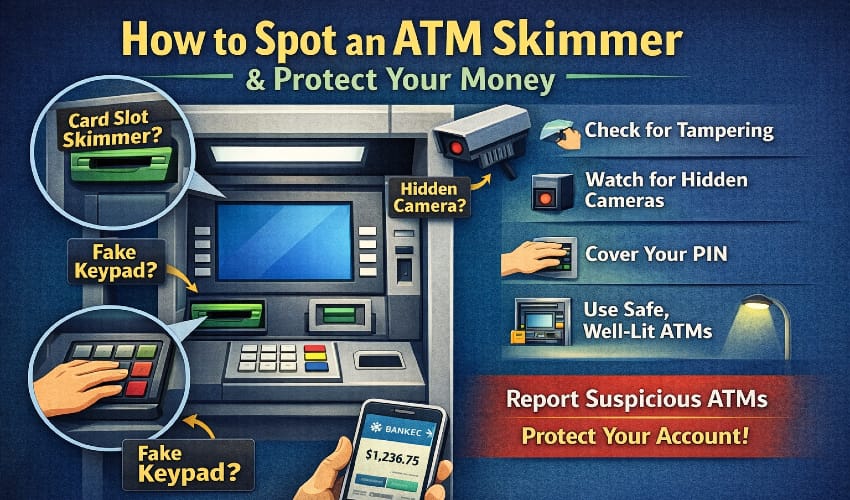
Quick ATM Safety Check: How to Avoid Skimmers
ATMs are convenient, fast, and everywhere—but they can also be a target for fraud. One of the most common ATM-related scams is skimming. What’s changed recently is how skimmers work—and that makes knowing the latest warning signs more important than ever.
The good news? With a little awareness and a few smart habits, you can dramatically reduce your risk and protect your peace of mind.
What is ATM Skimming?
ATM skimming happens when criminals use a device to secretly capture your ATM/debit card information and PIN. Traditionally, skimmers were visible devices attached to the outside of an ATM. Today, many criminals use deep-insert skimmers, which are placed inside the card reader and completely hidden from view. Skimming typically involves two parts:
- Card data capture, which copies information from the magnetic stripe.
- PIN capture, often done through hidden cameras or fake keypads.
Once criminals have both, they can create counterfeit cards or access accounts—sometimes before the cardholder notices anything is wrong.
The New Warning Signs: Deep-Insert (Internal) Skimmers
Unlike older skimmers, deep-insert skimmers sit entirely inside the ATM card slot, making them invisible from the outside. Here are the most important signs to watch for:
- Resistance or Friction When Inserting Your Card. If your card feels harder than usual to insert or remove, or if there’s noticeable friction, it could be a sign that something is inside the reader taking up space. This is one of the most common indicators of a deep-insert skimmer.
- Card Read Errors. If the machine struggles to read your card, asks you to reinsert it multiple times, or cancels the transaction unexpectedly, that could be a red flag.
If anything feels “off,” trust your instincts and stop the transaction.
How to Inspect an ATM Before You Use It
Even with hidden skimmers, a quick check still matters. Here's a quick list of things that may indicate tampering:
- Loose parts or movement with the cardholder.
- Mismatched colors or parts. Look for mismatched colors or parts.
- Unusual gaps or glue residue.
- Tiny pinholes near the keypad or screen (may indicate possible hidden cameras).
Pro tip: ATMs located right outside or inside financial institutions or in well-lit, high-traffic areas are generally safer than isolated or poorly lit machines.
Everyday Habits That Help Protect You
Even if an ATM looks normal, these habits add extra protection:
- Cover the keypad with your hand while entering your PIN.
- Use ATMs you know and trust whenever possible.
- Avoid machines that look damaged or display error messages.
- Review your account activity regularly—early detection makes a big difference.
What to Do If You Suspect a Skimmer
If your card doesn’t slide in smoothly, the machine behaves strangely, or something just doesn’t feel right:
- Cancel the transaction immediately.
- Do not insert your card.
- Use a different ATM.
- Report the issue to the ATM owner or your financial institution.
If you’ve already used an ATM and later notice suspicious activity, contact your financial institution right away. Quick action helps limit losses.
Extra Layers of Protection Worth Using
Many debit cards use chip technology, which is harder to duplicate than magnetic stripes. Transaction alerts through mobile or online banking can also notify you immediately if something unusual happens. These tools don’t just help after fraud—they can help stop it sooner.
Stay Alert, Not Anxious
ATM skimming is real, and it’s evolving, but it doesn’t need to be overwhelming. Paying attention to how your card feels when you insert it, doing a quick check of the machine, and monitoring your account regularly can go a long way. A little awareness helps ensure your next ATM stop stays exactly what it should be: quick, easy, and stress-free.
- CATEGORIES: Financial Education Fraud & Scams



One Account is Easy. Two Accounts are Better for Your Business.
 Read more about One Account is Easy. Two Accounts are Better for Your Business.
Easy Saving Habits You Can Start Right Away
Read more about Easy Saving Habits You Can Start Right Away
The 30-Day Financial Reset: One Month to Feel More in Control
Read more about The 30-Day Financial Reset: One Month to Feel More in Control