








In Focus – SCCCU Blog
Stay informed about the Credit Union’s activities, plus get practical advice on a variety of personal finance topics.
 Business Solutions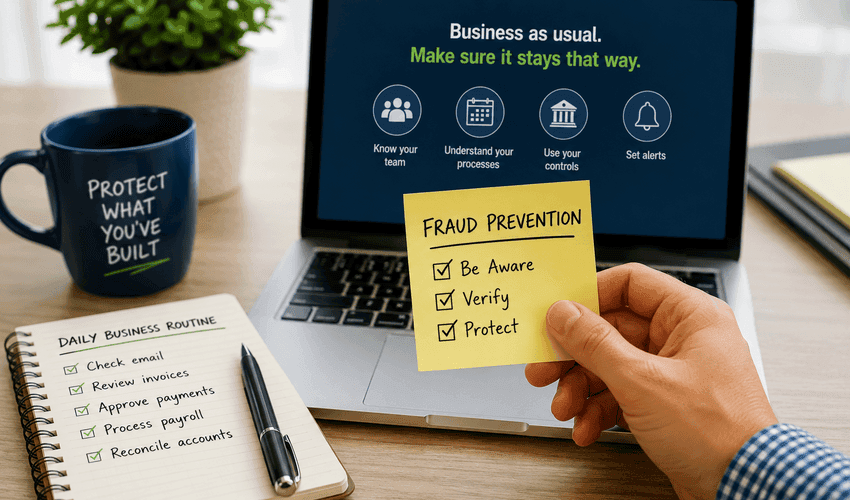
The Fraud Risk You Repeat Every Day
Every business has routines. Payroll happens on schedule. Vendors send invoices. Employees know who approves payments. Certain people have access to accounts, and everyone gets used to the way things are normally done. And while these routines help a business run efficiently, they can also help fraudsters make a fake request look surprisingly real.
Fraud today isn’t always an obvious email from a stranger. Criminals can gather information about a business, its employees, vendors, and daily operations from websites, social media, compromised email accounts, and other sources. The more they learn, the easier it becomes to create a request that fits into the normal flow of business. That’s why one of the best ways to protect your business is to take a closer look at the routines surrounding your money.
When "Normal" Looks a Little Too Normal
Consider a business that regularly pays a particular vendor on the last Friday of the month. An email arrives a few days before payment is due, saying the vendor has changed banks and provides new payment instructions. The timing is right. The invoice looks familiar. The sender’s name is correct. It would be easy to process the change without giving it much thought. And that's exactly what a fraudster is hoping will happen.
The same thing can occur with payroll changes, wire transfers, ACH payments, or requests that appear to come from an owner or manager. Fraudsters often try to fit their request into an existing routine because familiar requests are less likely to raise questions.
The solution isn’t to distrust every transaction. It’s to identify the moments when your normal routine should automatically include an extra check.
Build Verification into Your Routine
Start with the financial activities that could create the greatest loss if something went wrong, such as vendor payments, payroll, ACH transactions, wire transfers, or changes to account access. Then establish a few simple rules:
- If a vendor changes payment instructions, verify the change directly using contact information you already have.
- If an employee requests a change to direct deposit information, confirm it through your normal internal process.
- If an unexpected payment request appears to come from an owner or manager, verify it separately before sending the money.
Pay particular attention when someone asks you to skip a normal step. Fraudsters frequently create a sense of urgency because they don't want you to have time to question the request. "I need this today" shouldn't automatically mean "skip the verification." A good process makes verification routine, not awkward. Employees don't have to decide whether they trust the person making the request. They simply follow the same procedure every time.
Put Your Business Banking Tools to Work
Your financial accounts can also be part of that routine. Review the alerts and controls available through your business accounts. Here are a few to consider:
- Set up transaction alerts on your account using Online Banking or Mobile Banking. These alerts can help you identify unusual activity quickly and help you monitor your accounts more effectively.
- Establish access controls on your credit or debit cards. Transaction limits and additional approval requirements may provide another layer of protection for certain payments.
It's also worth reviewing these settings regularly. Employees leave. Responsibilities change. Businesses grow. Someone who needed account access two years ago may not need it today, and limits established when your business was smaller may no longer make sense.
Make Fraud Prevention Business as Usual
Protecting your business doesn't have to mean adding complicated procedures to everything you do. In many cases, it's about adding one simple question at the right moment: Does this need to be verified?
A change in payment instructions? Verify it. An unusual request to move money? Verify it. Someone asking you to bypass the normal process? Stop and verify it.
Your routines aren't the problem. In fact, they can become one of your best defenses. Build verification, account monitoring, and smart controls into the way you already do business, and you'll make it much harder for a fraudster to blend in.
- CATEGORIES: Business Solutions Fraud & Scams



Protect Yourself from “Vacation Recovery” Scams
 Read more about Protect Yourself from “Vacation Recovery” Scams
A Certified Check Doesn’t Protect You From a Scam
Read more about A Certified Check Doesn’t Protect You From a Scam
The Power of Financial Education: Knowledge That Changes Lives
Read more about The Power of Financial Education: Knowledge That Changes Lives